Does it really hurt?
Yes, briefly. Each pulse stings, sharply, and the pass itself is over in minutes. If you want numbing cream, say so; most patients go without.
Picosecond tattoo & permanent make-up removal.
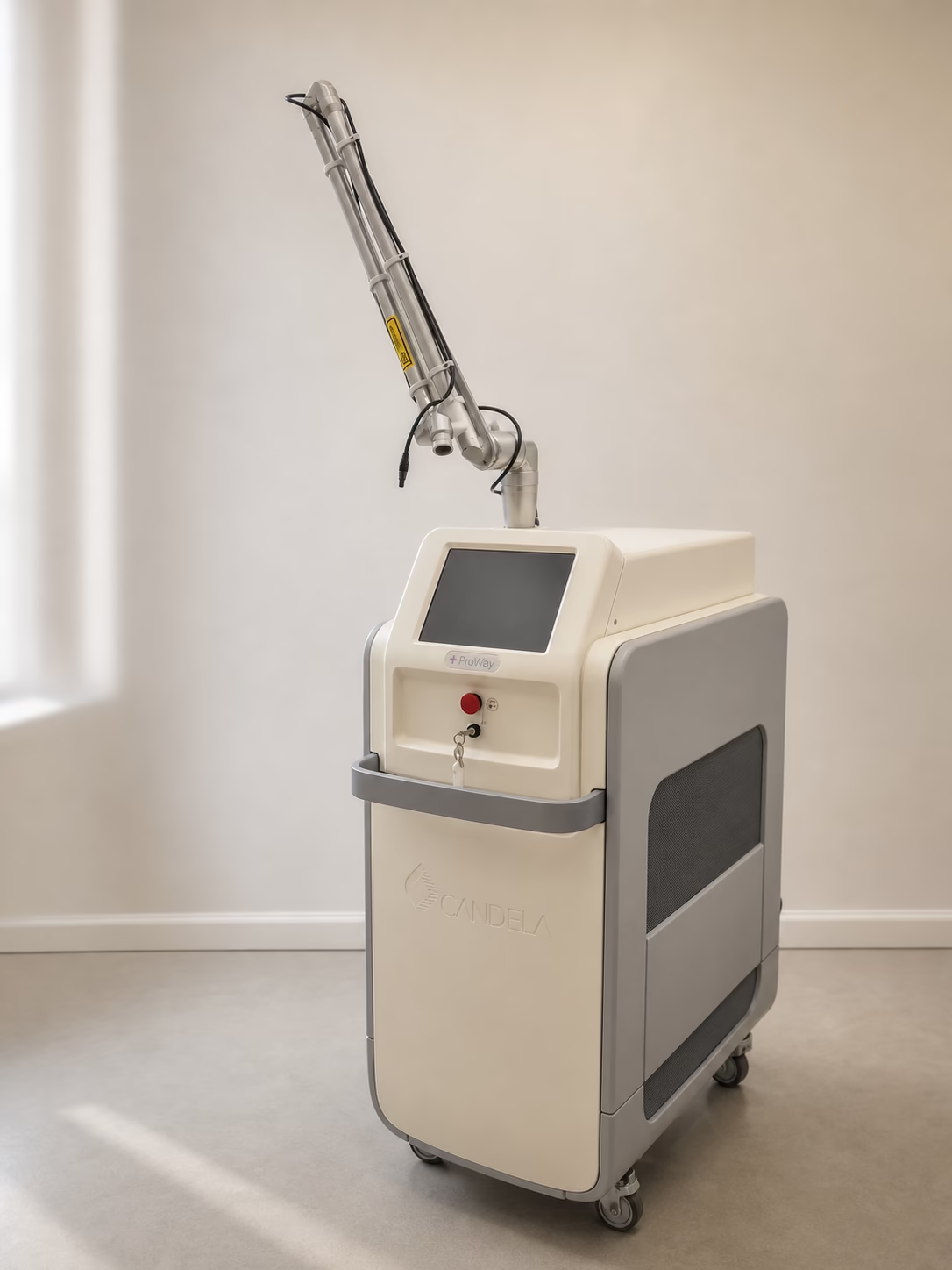
The Candela PicoWay®: a laser that delivers pulses in trillionths of a second. It shatters tattoo ink into particles small enough for the body to clear naturally, with far less heat damage to surrounding skin than older lasers. It also reaches green and light blue, where older lasers largely could not. That is not the same as clearing them easily: those two colours are the slowest to go, and they do not always clear completely. A tattoo already worked on by a non-medical laser is the harder case.
The skin will be pink and may feel like mild sunburn for 24–48 hours. Swelling and bruising can follow, especially after permanent make-up removal. Small dark scabs may appear over pigmented areas. All of this is expected. Do not pick at the scabs.
Yes, briefly. Each pulse stings, sharply, and the pass itself is over in minutes. If you want numbing cream, say so; most patients go without.
No. I won't promise something the skin decides. Most tattoos clear well, but ink composition, depth, age, and how your immune system handles fragmented pigment all matter. Colour matters too, and light blue and green are among the hardest to remove. After the first session I'll tell you what I think your tattoo can realistically reach, and we revise as we go.
Light blue and green. Both are very hard to remove: they take far more sessions than the black and red in the same tattoo, and they do not always clear completely. A picosecond laser reaches them where older lasers could not, which is not the same as clearing them easily. White and fluorescent inks resist even the right wavelength. Black clears most predictably, then red.
If a tattoo carries a lot of light blue or green, judge the plan by those colours rather than by the outline. I will tell you at the consultation which parts of your tattoo I expect to lag.
No. I won't quote a fixed number before I have seen how your skin clears the first one. The usual range is 4 to 6 for most tattoos, spaced 6 to 8 weeks apart; complex multicoloured or heavily saturated work can need more. From there the number firms up session by session.
Usually yes, and rarely in your favour. Tattoos already treated with non-medical lasers (salon devices, low-power diodes) tend to arrive with the ink broken up unevenly, and sometimes with scarring or patchy pigment loss over the top of it. What is left is harder to clear than the same tattoo untouched, and it takes more sessions. Tell me at the consultation what was done and how many times; it changes what I can realistically tell you to expect.
Then we don't. Not every tattoo was freely chosen, and not every one carries a good memory. It is rare, and I am glad it is rare. But for those patients the questions are harder than the laser.
You do not owe me the story. I need to know what is in the skin and how it has healed, not how it got there.
Tell me as much or as little as you want. We can work slowly, we can stop at any point in a session, and what is said in that room stays there.
Very rarely. The picosecond pulse breaks pigment via a photoacoustic effect, so almost no heat reaches the dermis. The scarring risk that older Q-switched lasers used to carry is largely gone. Two exceptions: if the original tattoo was applied over a pre-existing scar, that scar stays visible once the ink clears, and on rare predisposed skin types you can see patchy pigment loss. I keep the parameters conservative for both cases.
After a day or two, once the surface has settled. Gentle, unperfumed products first, and nothing rubbed into scabs while they are still there. If the area still looks angry by day 10, send a message.
Yes, with SPF 50+ on the area every morning. Clinics in far sunnier countries than this one run these lasers all year, and with the sunscreen used properly, so do I. The exception is a holiday where the sunscreen will not be reliable: keep two weeks clear before it and two weeks after. UV on unprotected, freshly treated skin is how a clean removal turns into a pigment problem.