Who does this.
How I trained, how I think, how I treat, and how the practice runs. The rest is for the consultation.
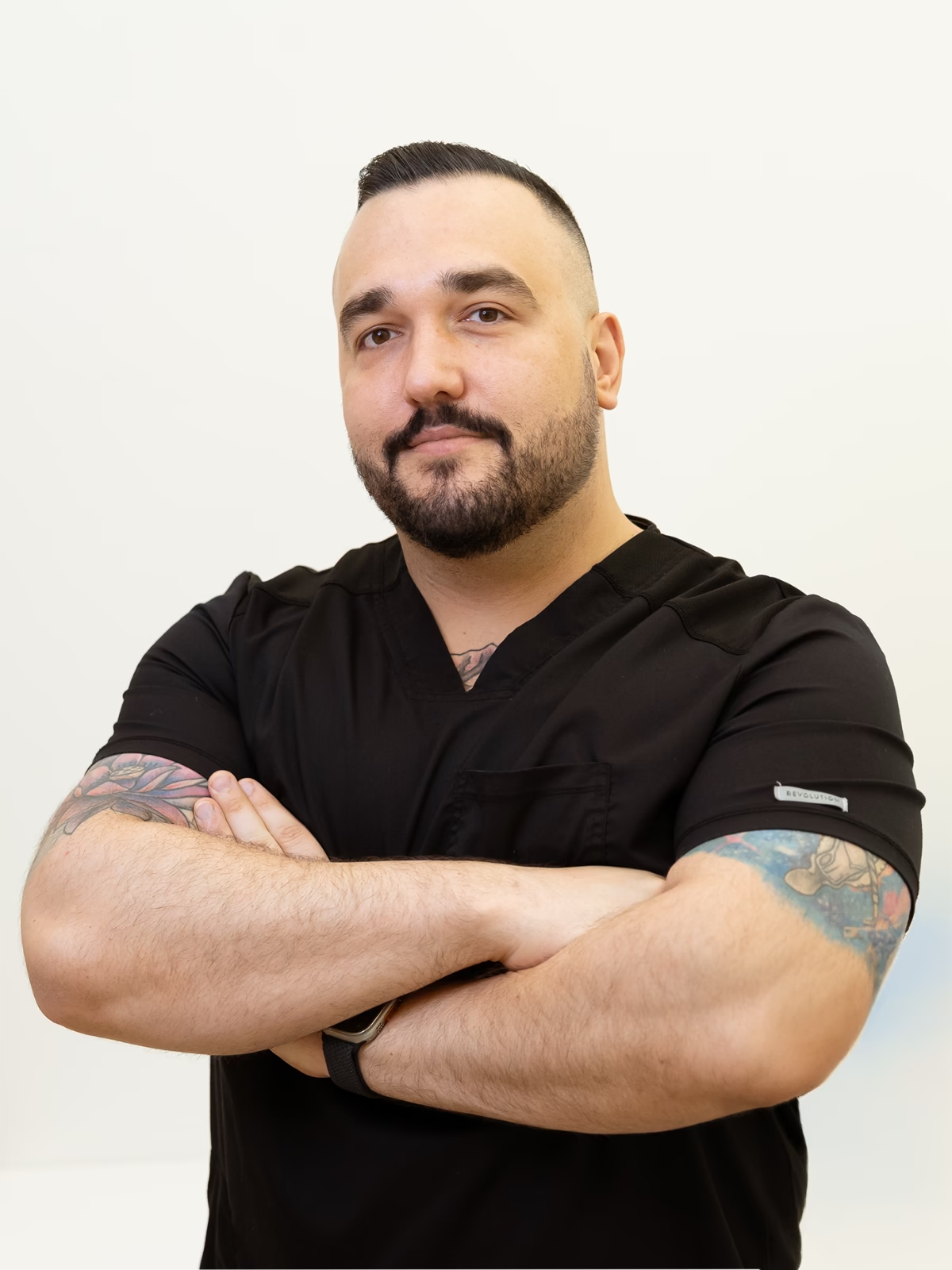
The best investment in your looks at 20? Stop smoking. At 40? Stop smoking.
Education
University of Belgrade, Faculty of Medicine
- Doctor of Medicine2014
- Specialist in Ophthalmology2021
- MSc Longevity Medicine2026
Roles and credentials
- Serbian Association of Interdisciplinary Aesthetic and Anti-Aging Medicine (SESIAM)Vice-President
- American Society for Laser Medicine and Surgery (ASLMS)Member
- O-NIRSA certificates of competence (V-NISSG), SwitzerlandLaser and EBD devices
- Aesthetic Academy, Faculty of Medicine, University of Rijeka, CroatiaLecturer
- Meda Esthetic and Meda Suisse Académie, Zurich, SwitzerlandFounder
I
The doctor
Trained as an ophthalmologist, then in aesthetic medicine.
I trained at the University of Belgrade, Faculty of Medicine, then specialised in ophthalmology. Twelve years in clinic since I qualified. You spend that long around the eye and you learn to read structure before surface.
Now I teach from it too. I lecture at the Aesthetic Academy of the Faculty of Medicine in Rijeka, and I am Vice-President of SESIAM, Serbia's society for interdisciplinary aesthetic and anti-ageing medicine.
It started as a favour.
A colleague asked me to help with her aesthetic patients. I said yes before I properly understood what I was agreeing to, and then spent months on courses and recorded lectures, watching other people's hands, before I let myself touch a face.
What kept me was the precision. The eye is an unforgiving organ: a fraction of a millimetre decides how it looks and whether it still works, and operating around it I was always weighing the two against each other. Aesthetic medicine turned out to be the same problem moved a few centimetres out. Millimetres still decide the outcome, same as they did in the eye.
When I'm not sure, I ask.
A hard case is not the place to protect my pride. I keep a close circle of colleagues across countries and specialties, and I lean on them without a second thought. More eyes on your case, but you remain my patient.
II
The medicine
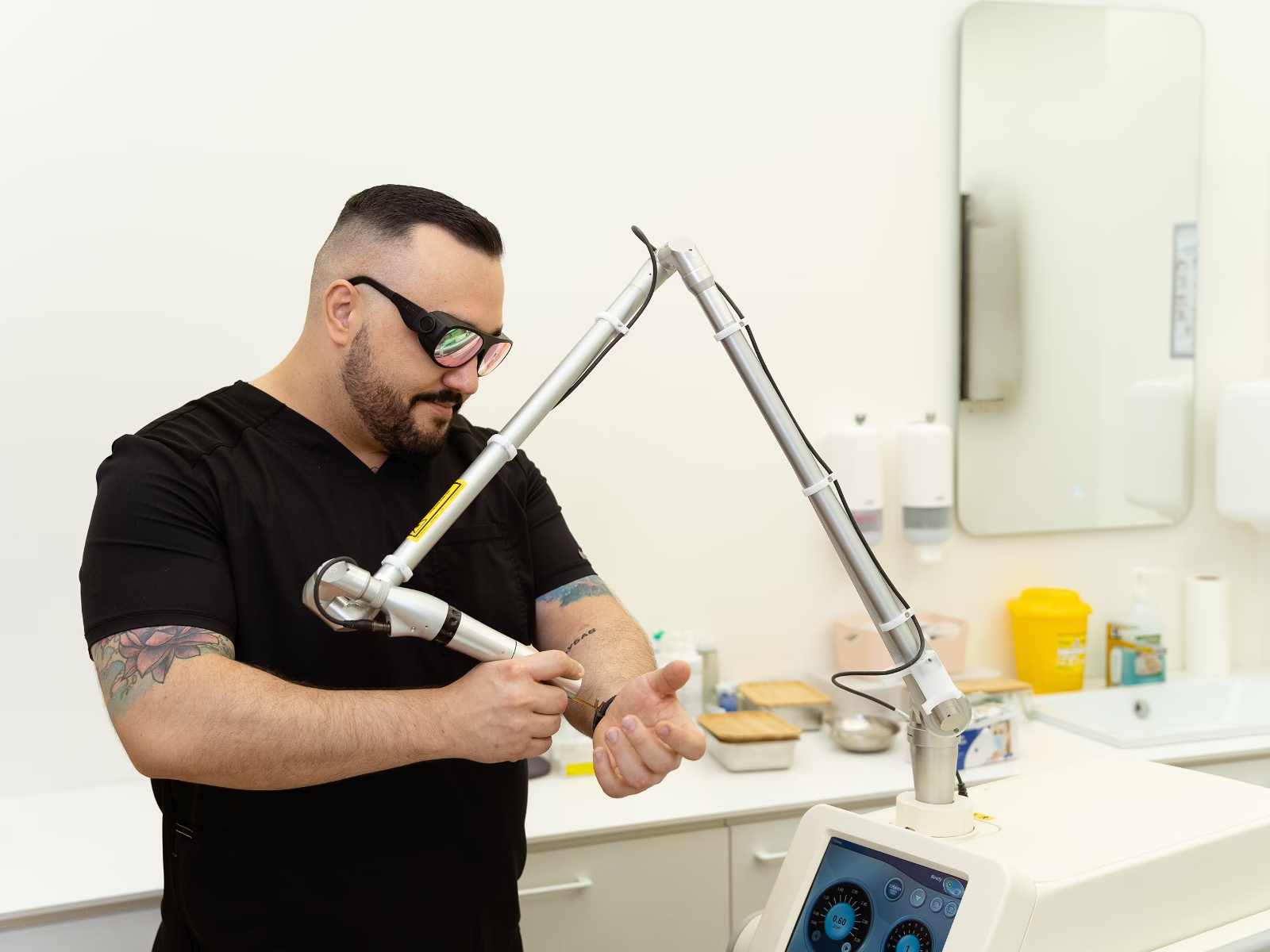
Less filler, more biology.
For years the standard answer to an ageing face was hyaluronic-acid filler: more volume, more water held under the skin. I have spent a long time moving the other way. I was early to collagen stimulators, skin boosters, and exosomes: treatments that ask the skin to rebuild its own structure. Filler still has its place, used sparingly and in the right spots. But a face that has only been filled tends to look it.
Often, the work is repair.
A large part of my practice is correction: undoing harm done outside medicine. Faces scarred by home-made acid and phenol peels. Tattoos burned and shattered by a salon IPL that was never meant to touch ink. Noses 'reduced' with a plasma pen across a kitchen table.
One woman came to me with her whole face scarred by a phenol peel that someone with no medical training had performed in her home. It took eight sessions to bring the scarring down to something she stopped noticing. Not erased. Quieter. Session by session, across a year.
Damage like this can almost always be made smaller. I do a lot of it.
Where I stop.
A mole or an unusual spot goes to a dermatology colleague before I touch it. And past a certain age, biology and gravity win. No needle or laser I own can argue with that, and when that is the answer, you leave with the name of a plastic surgeon I trust.
Three or more modalities in one session.
A session in my practice often combines three or more modalities at once: lasers, microneedling, injectables, each working a different layer of the same problem. How many, and which, depends on the face in front of me. Most clinics spread these across separate visits. I do them as one intervention, planned to the same safety rules as if they were separate.
Fresh, and almost no one can tell.
The compliment I want for my patients is that they look fresh and rested, younger even, while almost no one can tell a treatment was done. A result that still reads as you.
CO₂ laser is the exception. It will always show the next day. That is expected: the downtime is part of the deal, and I tell you before we start.
III
Your visit
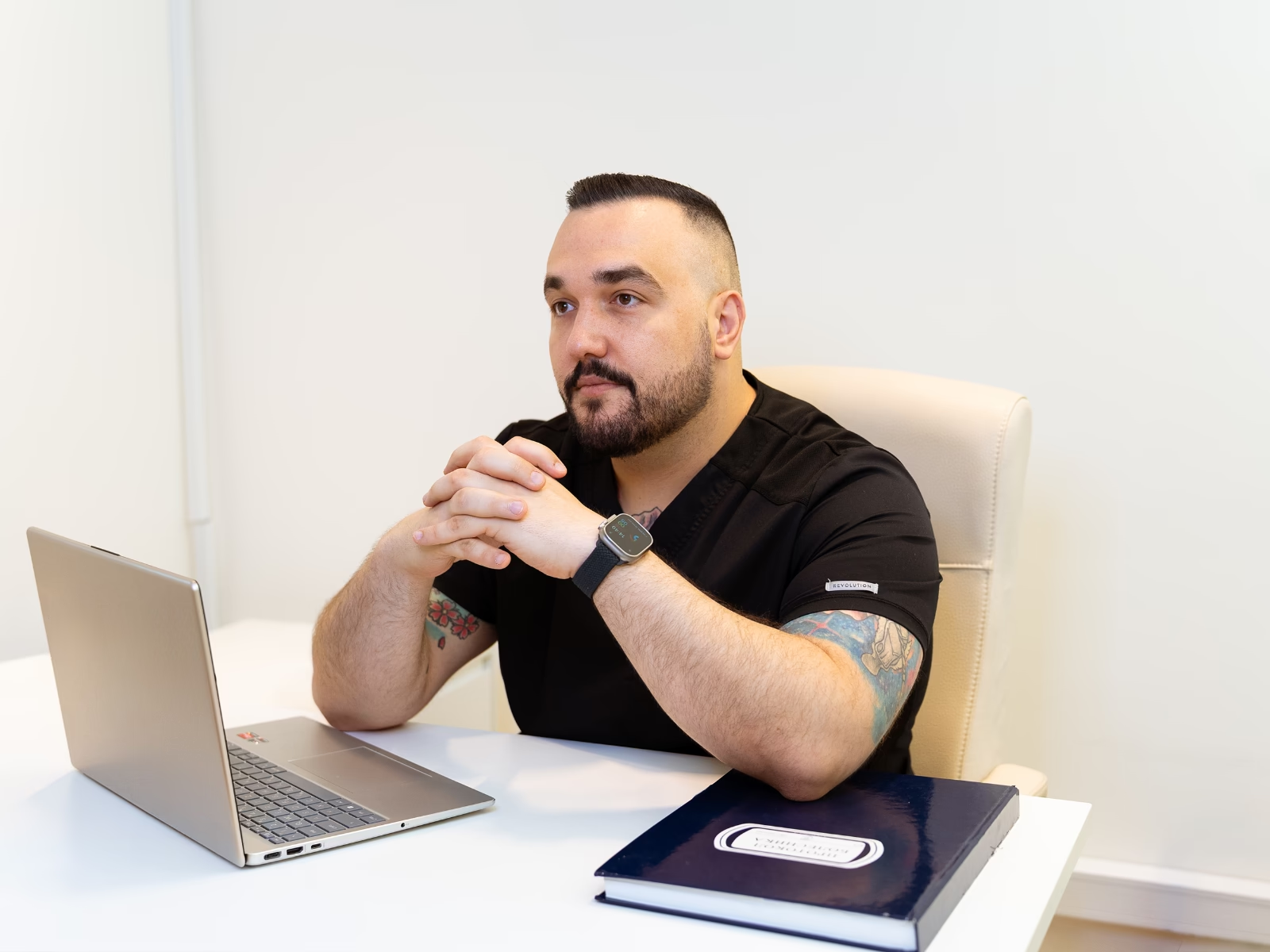
One consultation first.
Every treatment begins with a proper consultation, even if you already know what you want. I tell you what I see your face needs, confirm it is what you want, and plan it to your budget. If you are in a hurry or looking for cosmetic fast food, I am the wrong doctor and I will say so.
I won't rush you.
Belgrade is my base. I see patients at Miren Clinic a week or two every month, and the waiting list is about the same. The rest of the time I am abroad, lecturing and training other doctors; my aesthetic business in Zurich runs alongside. I am in each city every month, though the exact dates shift.
A busy day runs to around thirty patients across ten hours. If I am mid-consultation when your slot begins, I will not cut it short, so sometimes you wait. Better that than I short-change whoever is in the chair. No one gets rushed to free up time for the next person.
Some work I don't charge for.
Children with vascular marks, scars, or conditions that started early: no charge.
For LGBTQ patients, scar work after surgery usually goes the same way, gender-affirming surgery included. That is aftercare, not charity.
Repairing harm done elsewhere is a separate matter: for that I charge at cost, materials only. Ask at the consultation if you wonder whether any of it applies to you.